Texting Pandemic

It is no shockingly new revelation to anyone that obtrusively texting during inappropriate situations is becoming a global social pandemic. It’s such a problem that media reports about it have become redundant and uninformative. I felt that way as I started to read the following article from the Chicago Tribune entitled, “The lure of the LED screen.” My mind quickly changed when I realized the depth of this article, as it touches on not only the poor, disruptive manners of it, but also the physiological consequences of the “addiction” (the quotes are to credit the article, although I certainly am not at all opposed to using that word in reference to the phenomenon).

“The lure of the LED screen,” by Nina Metz, Chicago Tribune

Thematically, this article fits with a short film I co-wrote and art directed last summer for the 48 Hour Film Festival in Chicago, where it was actually the runner up for the Audience Choice Award. It is a slightly satirical social commentary on the same issue, although outside the confines of darkened theaters. Enjoy!

UnSociable Media

A number of Broadway stars have been reprimanded by critics for stopping shows mid-performance to scold audience members for texting in the theater. Patti LuPone stopping “Rose’s Turn” and holding the show until the patron was escorted out by an usher? That’s ballsy.  It may be a bit dramatic too, but it is theater after all. I have two simple words that have gotten me through scores of performances of varying degrees of quality, for those who are endlessly seduced by the subtle vibration of a text message: Airplane Mode. You don’t have to be 10,000 feet in the air for it to work properly.

Public Notice 3 & Shade

Two of my favorite installations at the Art Institute of Chicago this past year have both played with the presentation of light, one in an unconventional location and the other in a commonplace setting that has been innovatively reinterpreted.

PUBLIC NOTICE 3 by Jitish Kallat

"Public Notice 3," by Jitish Kallat

"Public Notice 3," by Jitish Kallat

The first sight of “Public Speech 3” is, in all honesty, jarring and confusing—it’s completely unexpected. Dots of color stare at you where a staircase should be. Questions like ‘What spilled down the stairs?’ and ‘When will drag queen Hello Dolly be making her entrance?’ come to mind. When your vision is given a chance to realign, however, you have the opportunity to view a truly spectacular installation. It has the outside-of-the-box creativity that people should expect from an art museum (art on a wall has been done), and the warm glow makes the staircase more inviting than imposing, appropriately transporting you to the galleries of the Impressionists—which I’m sure they would have appreciated very much.

"Public Notice 3," by Jitish Kallat; photo from artic.edu

Photo from artic.edu

The unique juxtaposition of the classic marble staircase with the colorful LED lights is what is initially so visually jarring, but ultimately part of what gives the piece its relevance. The color palette, while perhaps not the most sophisticated, creates a visual hierarchy that balances the impact of the lines and lines of words. Since I doubt most people actually read the entirety of the text, the hierarchy helps to highlight key words and phrases that convey a passionate pathos, the isolated words evoking connotations independent of the context. The location on the stairs more appropriately creates the radical political climate of the inspiration text and provides an environment that seems a natural home for political or social advocacy. Perhaps if more political addresses were presented in such a manner, people would actually pay attention to them instead of just complaining that their favorite television show isn’t on.

SHADE by Simon Heljdens

"Shade," by Simon Heljdens

"Shade," by Simon Heljdens

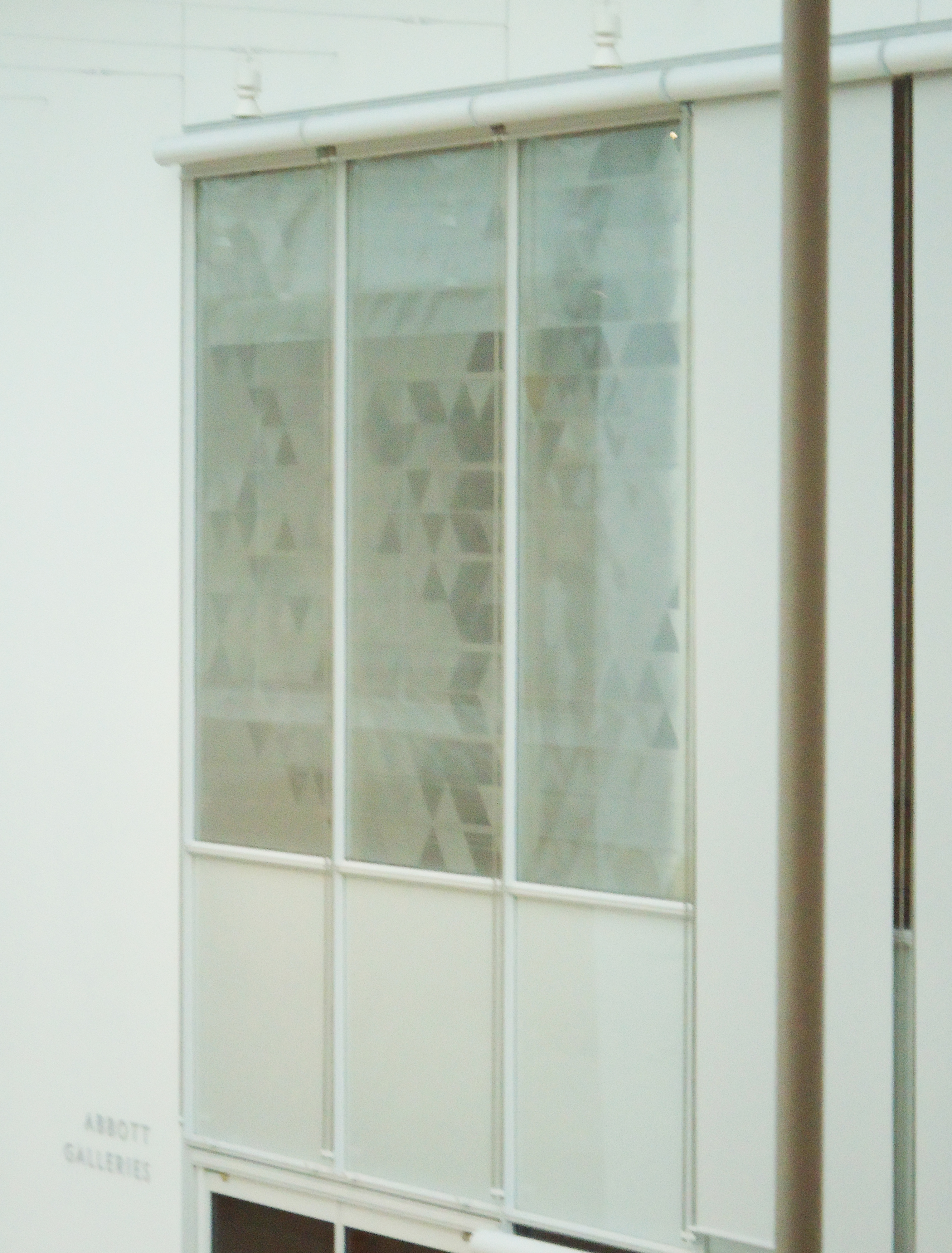
“Shade,” a window installation in the design exhibit entitled Hyperlinks, is a fascinating puzzle of glass tiles laced with an electromagnetic field that blink between transparency and opacity. Its hypnotic, geometric flow is transfixing and occasionally shocks you (thankfully not physically unless you touch it) with peaks into the world of the nearby hallway then plunges into complete opacity. I could have stared at it for hours, but the incessant admonishment of “no photography” (my photos were compliantly taken outside the exhibit) and the video of the garbage sweepers keeping perfect time prompted me to move on. Still, the exhibit showstopper possesses a therapeutic quality and a “wow” factor, the combination of which is worthy of repute.

The window represents one of the most interesting and promising facets of design: the fusion of aesthetics, functionality, and technology. The window utilizes software developed specifically for the installation that tracks the movement of the clouds outside the museum and reflects that movement in the opacity of the triangular glass tiles. While just being—for lack of a better word—cool, who knows what further practical application this innovative technology could have in looking toward environmental sustainability, such as temperature regulation and control in residential buildings or greater accessibility to natural lighting in interiors. I am no eco-technological visionary, so I’m sure actual buffs in this area are scoffing at my simplistic hypotheses, but the point is that the potential is there. The interactivity of design in general and its inherent connection with everyday human life make it a vital area for exploration and experimentation, with perhaps a little pretty mixed in.

Alexander McQueen “Savage Beauty”

"Savage Beauty: Romantic Nationalism," Alexander McQueen

"Romantic Nationalism," Alexander McQueen

For those of you who have sight, run—don’t walk—to the Alexander McQueen retrospective “Savage Beauty,” unfortunately in its final weeks at the Metropolitan Museum of Art. It’s like Disney World for anyone who is morbidly curious with design sensibilities. The pure imagination that exudes from the series of galleries surely justifies the one and a half hour wait at the entrance. It had buzz and excitement like the line to get into the latest installment of the “Twilight” franchise, only here the anticipation builds to something good.

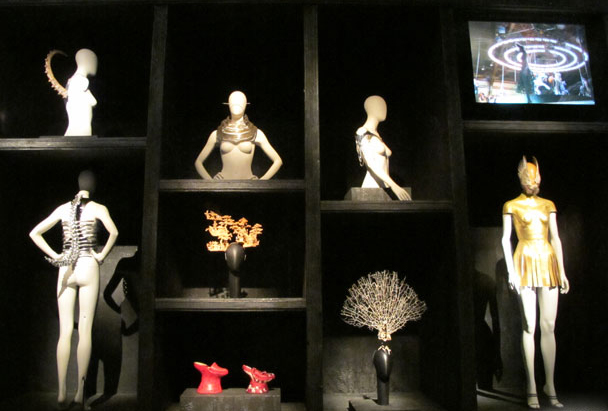
"Savage Beauty: Cabinet of Curiosities," Alexander McQueen

"Cabinet of Curiosities," Alexander McQueen

Love him or hate him, the exhibit, with its evocative and avant-garde drama, is sure to be entertaining. If you hate him, you will have gallery after gallery of grotesquely beautiful fashion to judge and criticize. If you love him, you will love him even more. The sheer proximity to the masterful creations will give you chills down your spin (many of which are present in the exhibit). The expansive diversity and depth of detail in the designer’s body of work is almost too great to justly profile in a short blog entry, as each room elicited volumes of emotions and intrigue. The room appropriately titled “Cabinet of Curiosities” featured a number of Philip Treacy hats created for the Alexander McQueen label, which were objects that I personally gravitated towards. The dark and mystical wonderland appeals to the deepest depths of the artistic soul—if you manage to leave uninspired, you are creatively dead inside.

"Savage Beauty: Romantic Primitivism," Alexander McQueen

"Romantic Primitivism," Alexander McQueen

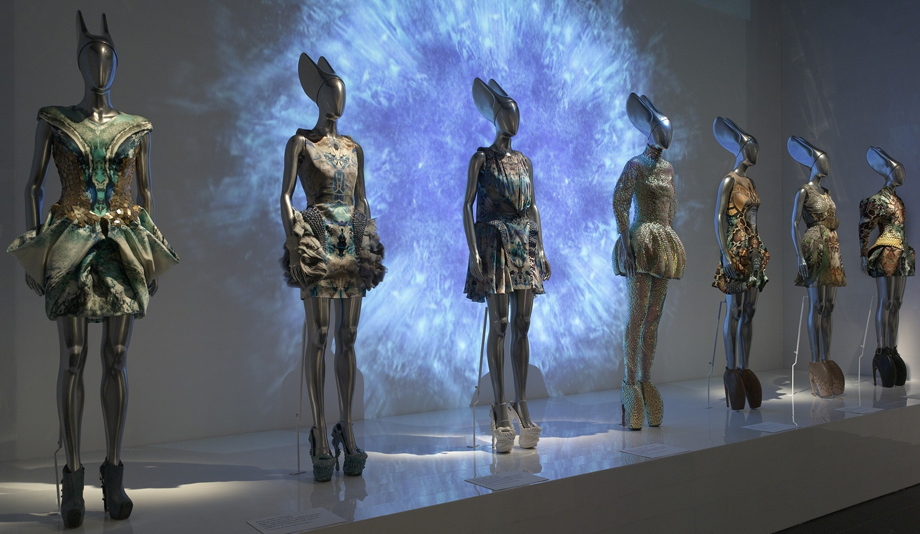
McQueen had an ingenious ability to borrow from other historical periods and cultures while not making the piece look too much like a costume, but rather fresh, innovative, and avant-garde. The sophistication and reverence with which he approached his inspiration is unparalleled. From the raw grit of nature to Gothic Romanticism to ancient philosophical texts fused with the ultramodern, the eclectic details are part of what give the show such originality and splendor. The pure imaginative theater is a clear departure from the work of contemporary designers and part of what made McQueen such a bold and refreshing voice in the industry. The theatrical quality of the work extends beyond the individual pieces to McQueen’s infamous fashion shows, they themselves performances and commentaries on nationalism and societal perceptions of beauty (and thoughtfully injected into the exhibit through video and the galleries’ environments).

"Savage Beauty: Gothic Romanticism," Alexander McQueen

"Gothic Romanticism," Alexander McQueen

A vital, theoretical component to McQueen’s work that many people overlook when entranced by the jaw-dropping visual of the aberrant fashion is the impact of philosophy. The designer’s fascination with the beauty of death and his complex ideas about the natural phenomenon are constantly present in the designs. This is not only seen in the dark color palette and macabre imagery, but also in the assertive beauty with which he treats the theme and its representation in the clothes. This philosophical thread is woven into the exhibit by quotes from McQueen himself, which annotate each group of mannequins and give the exhibit an eerie posthumous personal edge.

In the end, the exhibit is expertly curated by Andrew Bolton, and a fitting and tasteful celebration of the late designer. Now I just wish there were more Lady Gagas among us to wear these fascinating creations for the world to see.

"Savage Beauty: Plato's Atlantis," Alexander McQueen

"Plato's Atlantis," Alexander McQueen

Photographs Copyright 2011 Metropolitan Museum of Art

Restless Rainbow

"Restless Rainbow," Pae White

"Restless Rainbow," Pae White

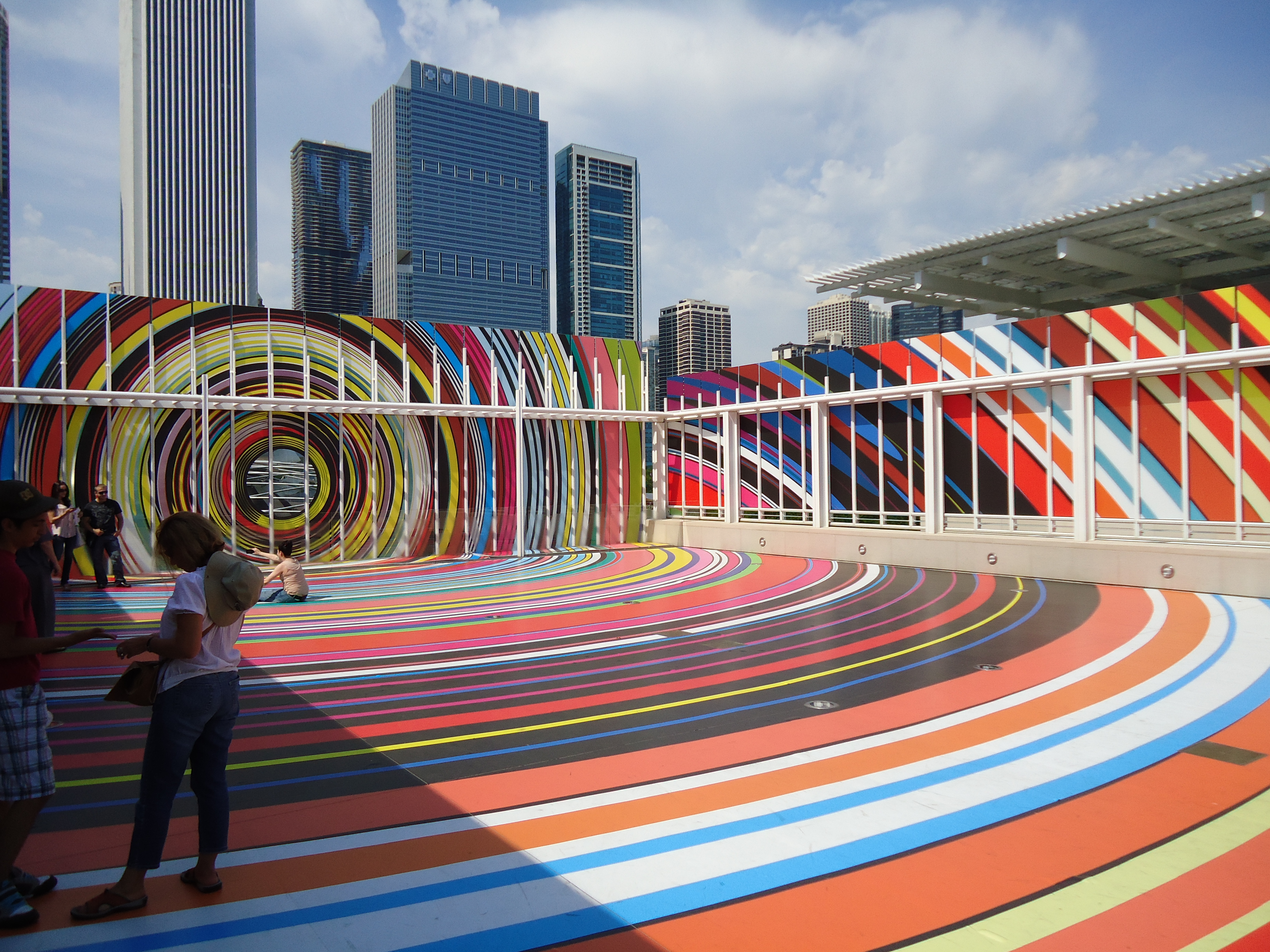
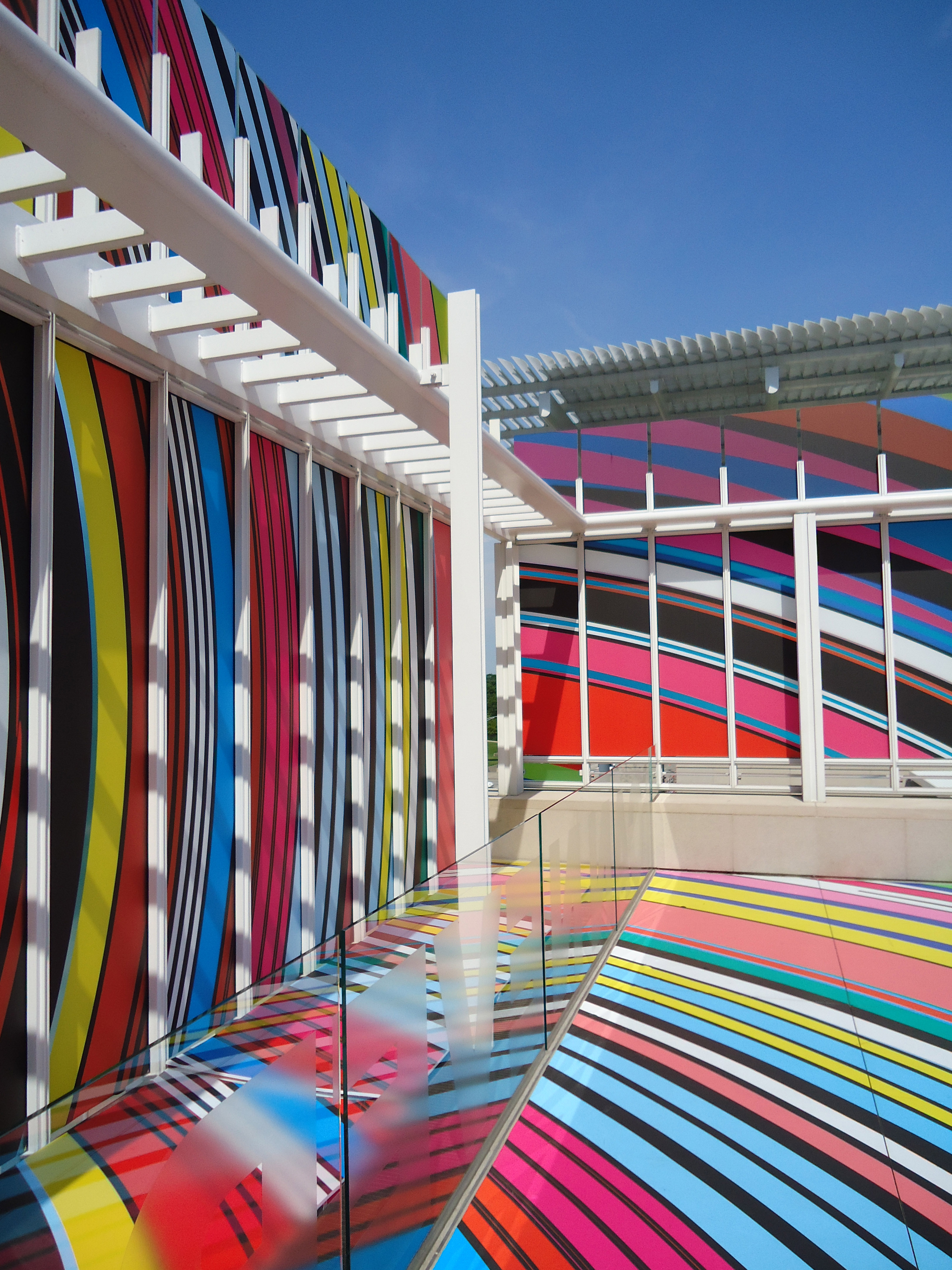
My current obsession is bold, unapologetic use of color. It’s a summer thing. That craving is being overwhelmingly satiated at the Art Institute of Chicago with their installation on the Bluhm Family Terrace in the Modern Wing entitled “Restless Rainbow” by Pae White. “What would it look like if a rainbow fell from the sky?” asks the Contemporary Artist. My mind goes to a stained glass window, a tile mosaic, or a 3-year-old’s vomit after eating a box of crayons. Fortunately for the sighted, White got the commission and has created a brilliant graphic piece that is a perfect artistic celebration of summer.

"Restless Rainbow," Pae White

"Restless Rainbow," Pae White

The broad, colorful curves of the Restless Rainbow completely blanket the north half of the Terrace. The nature of the installation not only invites you to view and appreciate it as art, but also demands that you experience and interact with it as a space, capable of engaging more of your senses than just sight. It allows you to escape to a vibrant world of color and shape seamlessly fused with the severe and stoic architectural surrounding of the Bluhm Terrace. The simple but acute architectural accents abruptly punctuate the wandering sentence expressively articulated by the Rainbow, giving it a comprehensible syntax as to not be perceived as overwhelming in its broad color spectrum.

"Restless Rainbow," Pae White

"Restless Rainbow," Pae White

There has of course been debate over the installation blocking the multi-million dollar views that can be seen from the Terrace at the Art Institute, especially in the summer when self-absorbed and culturally clueless brides run rampant through the streets. Some have called it an “Evil Eye” or “a clown’s nightmare” (I prefer, if being negative, to think of it as a hurricane hitting Richard Simmons’ house). However, the installation arguably enhances the view—hear me out. After engulfing your senses in a whirl of color and abstract spatial dissonance, the experience culminates in a viewing portal exposing the panoramic expanse of Millennium Park. The heightened anticipation caused by the Rainbow rationing the view makes it even more commanding and an even hotter piece of real estate than it already was.

"Restless Rainbow," Pae White

"Restless Rainbow," Pae White

It could be an important piece for the museum because, not only did it create buzz (which was about 60% of the reason I ran to see it so quickly), but with its brazen presence and digital-age feel it will also attract a viewer that may not frequent the seemingly stuffy, white-walled galleries of an art museum that some deem boring (or perhaps more appropriately worded as “intimidating”). The installation is accessible to a broader spectrum (pardon the pun) of viewers that might not have the education or intellectual or imaginative capabilities to understand or appreciate the other offerings of the Modern Wing. After all, who really “gets” Surrealism? Regardless, it is definitely an experience to see and enjoy before the fallen “Restless Rainbow” finds its way back into the sky after September 20th.